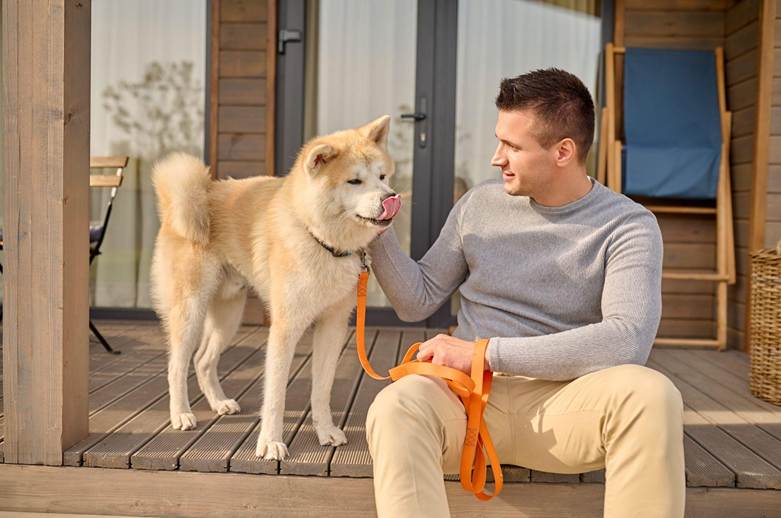
For many dog owners, trust is something that either exists or doesn’t. Yet Marissa Corbett often encourages people to think about trust differently. Rather than viewing it as a fixed trait, it can be more helpful to see trust as something built gradually through everyday interactions. Like a bank account, every experience can either strengthen confidence or slowly diminish it.
Most dog owners understand the importance of training sessions.
They dedicate time to teaching commands, reinforcing good behavior, and creating structure. These efforts are valuable, but they represent only a small portion of a dog’s daily experience.
The majority of trust-building happens outside formal training.
It occurs during ordinary moments:
- daily walks
- feeding routines
- greetings at the door
- playtime
- handling stressful situations
- responding to mistakes
- navigating unfamiliar environments
Each interaction contributes to a dog’s understanding of the people it depends on. Over time, those experiences accumulate into what could be described as a trust bank.
Understanding the Concept of Trust Deposits
Trust grows when dogs repeatedly experience consistency, safety, and predictability.
Every positive interaction acts as a deposit.
These deposits may seem small in isolation, but their cumulative effect can be powerful.
Examples of trust deposits include:
- following through on expectations
- providing clear communication
- respecting a dog’s boundaries
- remaining calm during challenging situations
- rewarding desired behaviors consistently
- creating predictable routines
- helping a dog feel safe during new experiences
When these behaviors occur regularly, dogs develop confidence in both their environment and the people guiding them. This confidence often influences far more than obedience. It affects resilience, emotional stability, adaptability, and willingness to learn.
How Trust Withdrawals Happen
Just as trust can be built gradually, it can also be weakened through repeated experiences that create confusion or uncertainty.
Most trust withdrawals are not intentional.
They often occur when people are unaware of the messages they are sending.
Common examples include:
- inconsistent rules
- unpredictable reactions
- mixed signals
- excessive correction
- ignoring signs of stress
- expecting behavior a dog has not been taught
These situations can leave dogs uncertain about what is expected or how to respond.
A dog that experiences confusion regularly may become hesitant, anxious, reactive, or less responsive. The issue is rarely stubbornness.
More often, it reflects a gap in understanding or confidence.
Why Consistency Matters More Than Perfection
Many owners worry about making mistakes. Fortunately, trust does not require perfection.
Dogs are remarkably adaptable and forgiving. What matters most is consistency over time.
A single mistake rarely damages a strong relationship. Problems typically arise when confusion becomes a recurring pattern.
Consistency helps dogs understand:
- what behaviors are encouraged
- what boundaries exist
- how people are likely to respond
- whether the environment feels predictable
When expectations remain relatively stable, dogs can focus less energy on uncertainty and more energy on learning.
Trust thrives in environments where communication feels clear.
Confidence Is Often a Reflection of Trust
Confident dogs are frequently described as well-adjusted, resilient, and capable of handling new situations.
While personality certainly plays a role, confidence is also influenced by experience.
Dogs develop confidence when they repeatedly learn that:
- challenges can be navigated safely
- guidance will be available when needed
- boundaries are predictable
- communication is reliable
Trust creates a foundation from which confidence grows.
Without that foundation, even talented or intelligent dogs may struggle in unfamiliar situations.
This is particularly important when working with:
- rescue dogs
- fearful dogs
- puppies
- dogs recovering from difficult experiences
In these cases, trust often becomes the first and most important training goal.
Everyday Moments Carry More Weight Than We Realize
Many owners focus heavily on correcting unwanted behavior.
While addressing behavioral issues is important, dogs often learn just as much from everyday interactions that appear insignificant.
Simple moments can strengthen trust:
- waiting patiently during a walk
- responding calmly to mistakes
- providing reassurance without creating dependency
- honoring established boundaries
- creating positive experiences around new situations
These actions communicate reliability.
Over time, reliability becomes one of the strongest predictors of trust.
Dogs learn that their environment is understandable and that the people around them can be counted on.
Trust Changes the Way Dogs Learn
Training tends to be more effective when trust already exists.
Dogs that feel secure are often more willing to:
- explore new situations
- attempt unfamiliar tasks
- recover from setbacks
- engage with training
- respond to guidance
Trust reduces the mental energy spent on self-protection and uncertainty.
Instead of focusing on potential threats, dogs can focus on learning. This is one reason relationship-building and behavior modification are often deeply connected.
A dog that trusts its handler is not simply obeying commands. It is participating in a relationship built on confidence and communication.
The Long-Term Value of Investing in Trust
Trust cannot be built overnight.
Like any meaningful relationship, it develops through repeated experiences over time.
The good news is that most opportunities to strengthen trust are already part of everyday life.
Each interaction presents a choice.
- Will it create clarity or confusion?
- Will it reinforce safety or uncertainty?
- Will it strengthen confidence or weaken it?
When viewed through this lens, dog training becomes about more than teaching behaviors.
It becomes about building a relationship capable of supporting those behaviors for years to come.
A Strong Relationship Starts With Small Moments
Many dog owners search for the perfect training method, tool, or technique.
While training strategies certainly matter, the strongest foundation often comes from something simpler.
Trust.
It is built through consistency, communication, patience, and understanding. It grows through ordinary moments repeated over time.
- Every interaction leaves an impression.
- Some strengthen confidence. Others create uncertainty.
- Viewed collectively, these moments form the relationship itself.
And when that relationship is built on trust, many other aspects of training become easier, more effective, and more rewarding for both dogs and the people who care for them.